One of the things I find most exciting about GTA 6 is not the graphics.
It is not the larger map.
And it is not even the story.
It is the possibility that Rockstar is about to rethink how an open world actually behaves.
Over the past few months, we have heard about systems like the new weapon loadout limits, where players may no longer carry an entire arsenal at all times. We have seen stronger signs that Jason and Lucia are more tightly connected through character switching and shared story flow. And then there is the NPC behavior already visible in the trailers, which looks more detailed and responsive than anything Rockstar has shown before.
Those ideas all point in the same direction.
They are not just about realism for its own sake. They are about making the world feel more reactive to the player.
And if Rockstar really is pushing that idea as far as it seems, there is one feature that could end up being much more important than people expect.
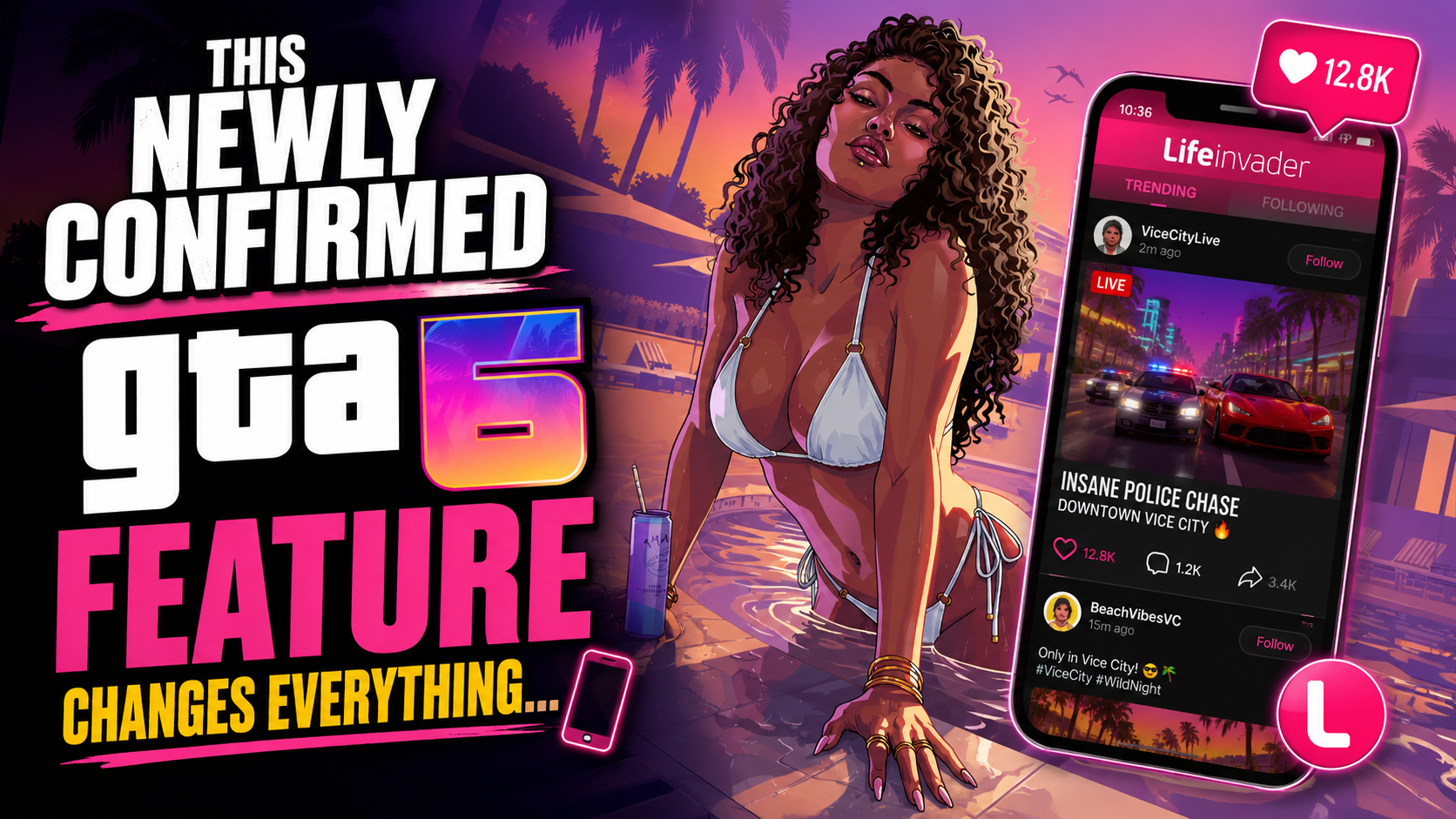
The social media system.
At first glance, that may not sound especially exciting.
GTA has had phones before. It has had fake websites, parody feeds, and background satire for years.
But what Rockstar is showing in the GTA 6 trailers feels different.
Social media no longer looks like set dressing. It looks like part of the world itself.
Throughout both trailers, Rockstar repeatedly frames events through phone cameras, livestreams, and short vertical clips. That choice does more than make the game feel modern. It reflects the way people now experience chaos in real life.
When something wild happens, the first instinct is not always to call for help.
Very often, it is to start recording.
That is where this system starts getting interesting.
The real leap may be memory, not spectacle
Imagine you are driving through Vice City when a routine police stop suddenly turns into a huge chase.
Cars are crashing. Helicopters are circling overhead. The whole street is in chaos.
In older GTA games, the moment would usually end the same way. You escape, the wanted level disappears, and the world quietly resets around you.
But GTA 6 may be trying to move beyond that.
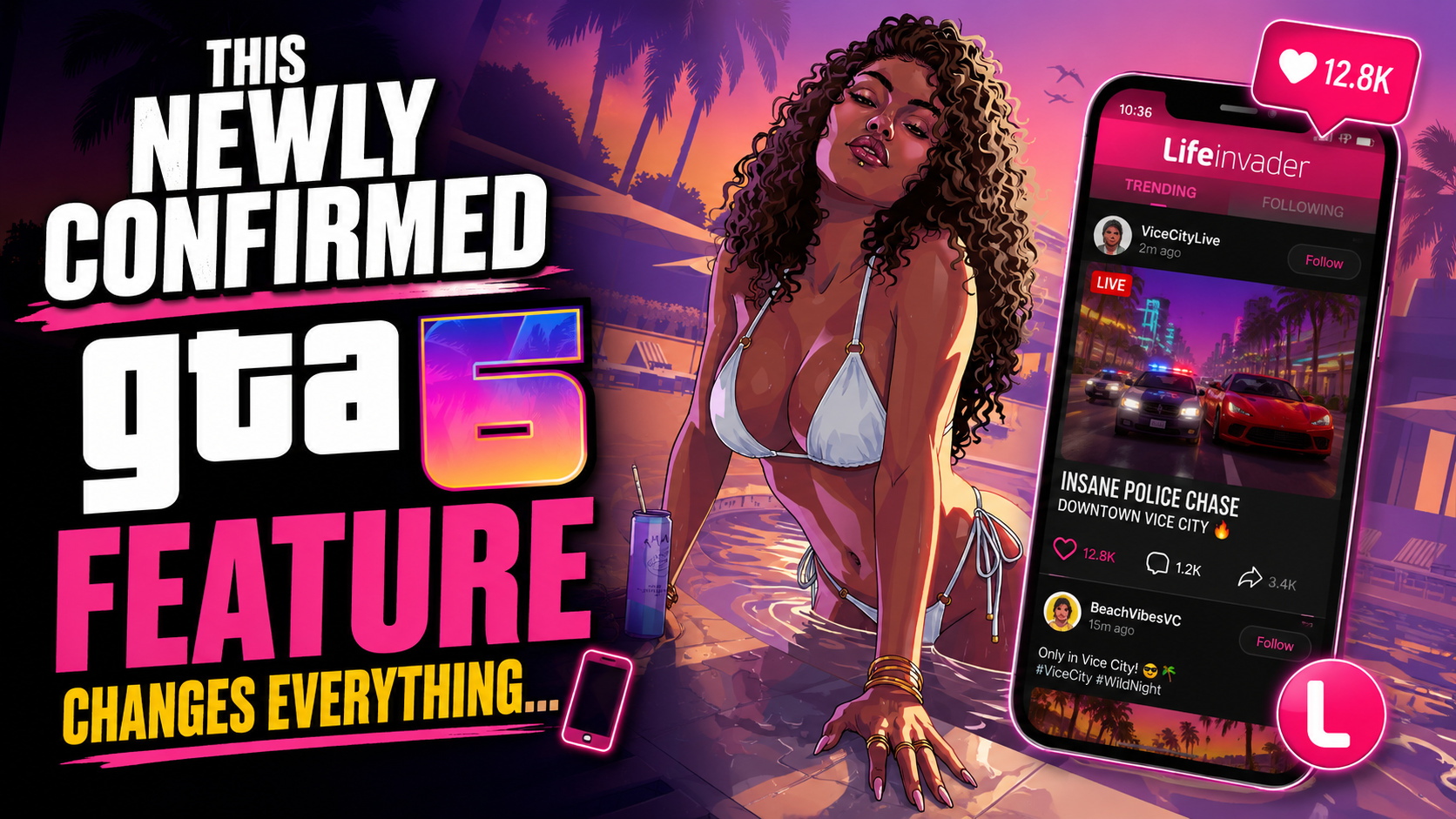
Imagine an NPC standing on the sidewalk captured the whole thing on a phone. A few minutes later, that same clip starts spreading across the in-game social media app. People comment on it. They share it. They laugh at it. They argue about what happened.
Suddenly the event does not just vanish.
It leaves a trace.
That is the bigger idea here. The upgrade is not simply that the world looks more realistic. It is that the world may start remembering what you did.
And honestly, that would be a much more meaningful leap than better lighting or denser traffic.
A reactive social feed could give Leonida a memory
Once you start following that idea, the possibilities open up quickly.
Imagine robbing a convenience store and getting away clean. No obvious witnesses. No police on your tail. As far as the traditional GTA logic goes, the moment is over.
Then later, while browsing the in-game phone, you come across a shaky uploaded clip from across the street.
It is your robbery.
The comments are full of people arguing over what happened. Some think it was staged. Others are trying to identify the getaway car. Maybe somebody connects it to another incident involving Jason or Lucia.
That changes the feel of the whole world.
Your actions stop being disposable little bursts of chaos. They start leaving behind footprints.
Previous GTA games were brilliant at giving players freedom in the moment. What they did not really do was preserve the social aftermath of that freedom. Once the heat died down, it was often as if nothing had happened at all.
GTA 6 looks like it could be aiming higher.
Trailer 2 already hints that ordinary people matter more
One reason this theory feels plausible is that Rockstar is already signaling it visually.
Trailer 2 is packed with social-media-style clips. Not polished news segments. Not carefully staged cinematic recaps. Just ordinary people filming whatever strange or chaotic thing happened to be in front of them.
That feels deliberate.
Modern cities are often documented from the ground up. Big stories do not always break through institutions first. They spread because random people happened to be standing nearby with a phone in their hand.
Vice City and the wider Leonida setting seem built for exactly that energy.
If Rockstar turns that into a real gameplay layer rather than just a visual motif, the world starts becoming something more than a sandbox. It becomes a place that observes itself.
And that matters because it creates reactivity without forcing the player into another heavy system. You do not need to grind followers or micromanage a profile for the idea to work. The important part is simply that the world acknowledges what happened.
That alone could make Leonida feel more alive than almost any open world Rockstar has built before.
The online version of this idea could be even bigger
As interesting as this sounds for single-player, GTA Online may be where the concept becomes genuinely revolutionary.
Imagine logging into the next version of GTA Online and opening the in-game social app.
Instead of browsing entirely fake filler posts generated by the game, you start seeing content shaped by what other players are actually doing.
One crew uploads a clip of an absurd street race through downtown Vice City. Another player shares footage from a hidden location the wider community has not found yet. Somebody else posts an image from a car meet that suddenly sends people driving across the map to join it.
Now the social feed becomes another layer of exploration.
Not because Rockstar is placing a giant marker on the map, but because the community itself is creating trails for other players to follow.
That would feel strangely natural. Almost like scrolling TikTok or Instagram, except every clip is coming from people living inside the same online world as you.
A system like that could turn spontaneous player behavior into discovery, folklore, and live community storytelling without Rockstar having to script every moment itself.
Rockstar may be chasing living systems, not just bigger maps
That is the part that makes this idea fit Rockstar’s wider direction.
For years, the easiest way to market open-world games has been scale. Bigger map. More content. More icons. More side activities.
GTA 6 may still deliver all of that. But the more interesting evolution is something else.
Rockstar appears to be chasing worlds that feel alive even when no mission is actively telling the player what to do.
The social media system fits that perfectly.
It is not just another app. It could be a soft consequence engine, a discovery engine, and a world-memory engine all at once. It can react to chaos, preserve it, and reflect it back at the player later.
That would be a major shift because it gives the world a voice without constantly interrupting the player.
And if Rockstar gets that balance right, GTA 6 will not just feel more detailed than previous entries.
It will feel more aware.
This could become one of GTA 6’s smartest ideas
That is why the social media system stands out so much to me.
On paper, it sounds like a minor modern detail. In practice, it could become one of the systems that changes how players think about the whole game.
If NPCs can record events, if those events can spread across an in-world feed, and if that feed can preserve the social aftermath of what players do, then Leonida starts behaving less like a stage and more like a place with memory.
That is a very different promise from simple realism.
It is not just about making the world prettier.
It is about making the world feel like it is living alongside you.
And if Rockstar really pulls that off, GTA 6 may not just deliver a bigger open world.
It may deliver one of the first open worlds that truly feels socially alive.
Watch the full video
If you want the original video version of this breakdown, watch it here: